

Who do you say that Jesus is?
That’s the question of today’s Gospel. It’s what Jesus asks his disciples at Caesarea Philippi. And it’s what he asks each of us here, today.
The first answers, from the popular imagination of the day, look backward. He is Elijah or Jeremiah, one of the ancient Prophets. If we want to get really edgy and contemporary, maybe John the Baptist. But they look to define him in terms of what they’ve seen before.
It’s a common enough human tendency. Right now the most popular movies of the summer are a three-thousand year-old epic from ancient Greece, and the eleventh Spider-Man film. The conventional wisdom in Hollywood – as with all marketing, really, is that if you want to sell something new you have to pitch it as something old and familiar.
It’s conventional wisdom in preaching too! We’re told to use relatable ideas and anecdotes. It’s what Jesus did with his parables – using a slice of life, something ordinary, to explain the extra-ordinary message of the Gospel.
Because of course, what Jesus gives us is not the same old same old. He is the Christ, son of the Living God, as Peter declares. Something he could not have figured out on his own, Jesus said. This is God revealing something new.
But even so, this Something New that Peter recognizes is built upon the old. All those Prophets the other disciples named, they point toward the Christ who is to come. Peter’s statement uses the old and familiar to look forward and recognize what God is doing in the here and now.
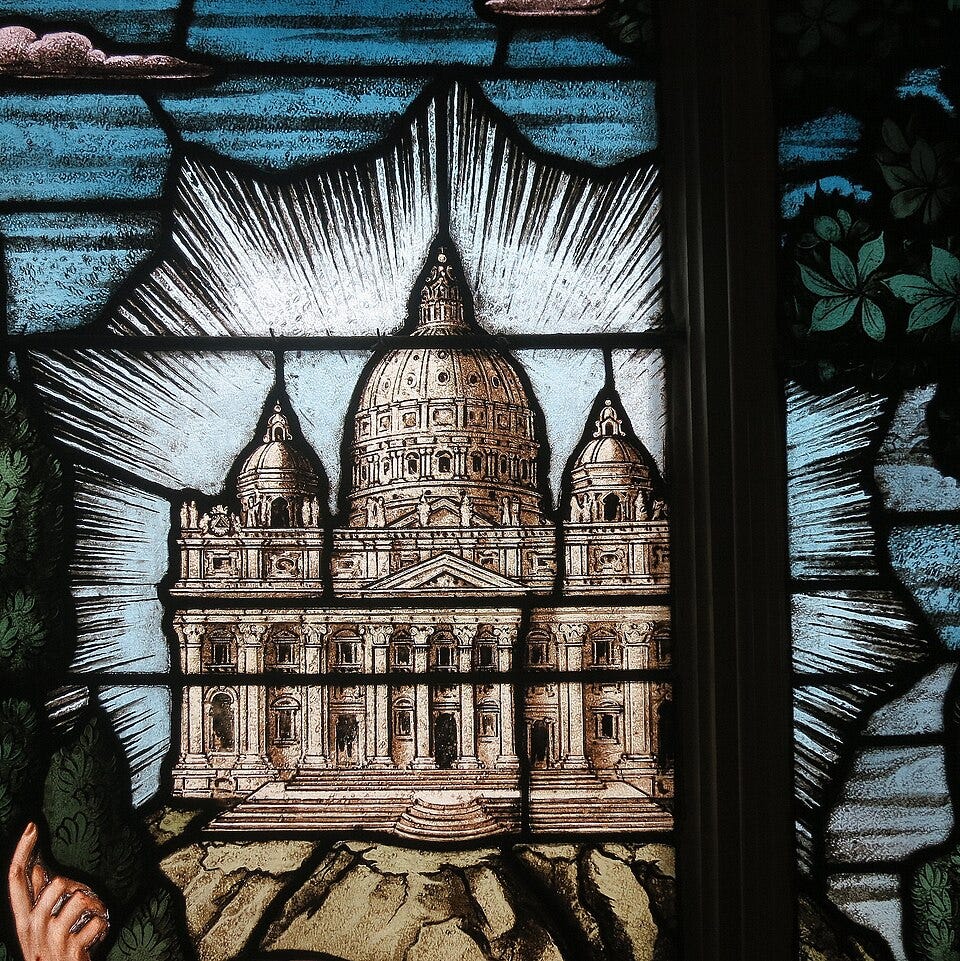
And maybe that’s part of what Jesus has in mind when he declares Peter the “Rock” on which his Church will be built. As the first Pope, Peter -- and all who follow in his office -- will need that ability to look backwards and forwards. To stand firm on the traditions of the past while recognizing how God is active in the present.
Because our faith is not only rituals and ancient traditions. Our faith is an active relationship with the Living God. And it’s not just for the Popes. Each of us is called into this relationship.
Saint Paul in our second reading speaks of the “depth of the riches and wisdom and knowledge of God!”
How inscrutable are his judgements and how unsearchable his ways! He is beyond our experience, beyond our understanding, beyond even our comprehension.
But He comes to us in the mundane and the familiar – in the traditions and ceremonies of our faith, in the ordinariness of the Sacraments, as bread and wine. But He also comes to us in the person of Jesus – a human just like us in all things but sin. He comes to us too in Community, through our brothers and sisters we worship with and through the poor and the needy we serve. Through faith, through the Sacraments, through the Church, he invites us in to a personal and ongoing relationship.
That’s the other piece, I think, that Peter draws upon in his proclamation. He knows Jesus. Not as a Prophet or Messiah, but as a guy. Someone he travels with and hangs out with. I think this too is part of that Rock on which Jesus builds His Church.
So who do we say Jesus is?
The answer begins in the Scriptures, the Traditions, the Liturgy of our Church and these are how we get to know Him, how we sustain a relationship. But He is inviting us into something more. Challenging us out of what is comfortable and familiar and calling us ever deeper into the riches and wisdom and knowledge of Him.